Portuguese confectionery, like all national gastronomy, is quite rich, and the Christmas season is no exception. Many sweets are eaten at Christmas time, some more traditional than others, and the most popular is undoubtedly Bolo Rei (King Cake).
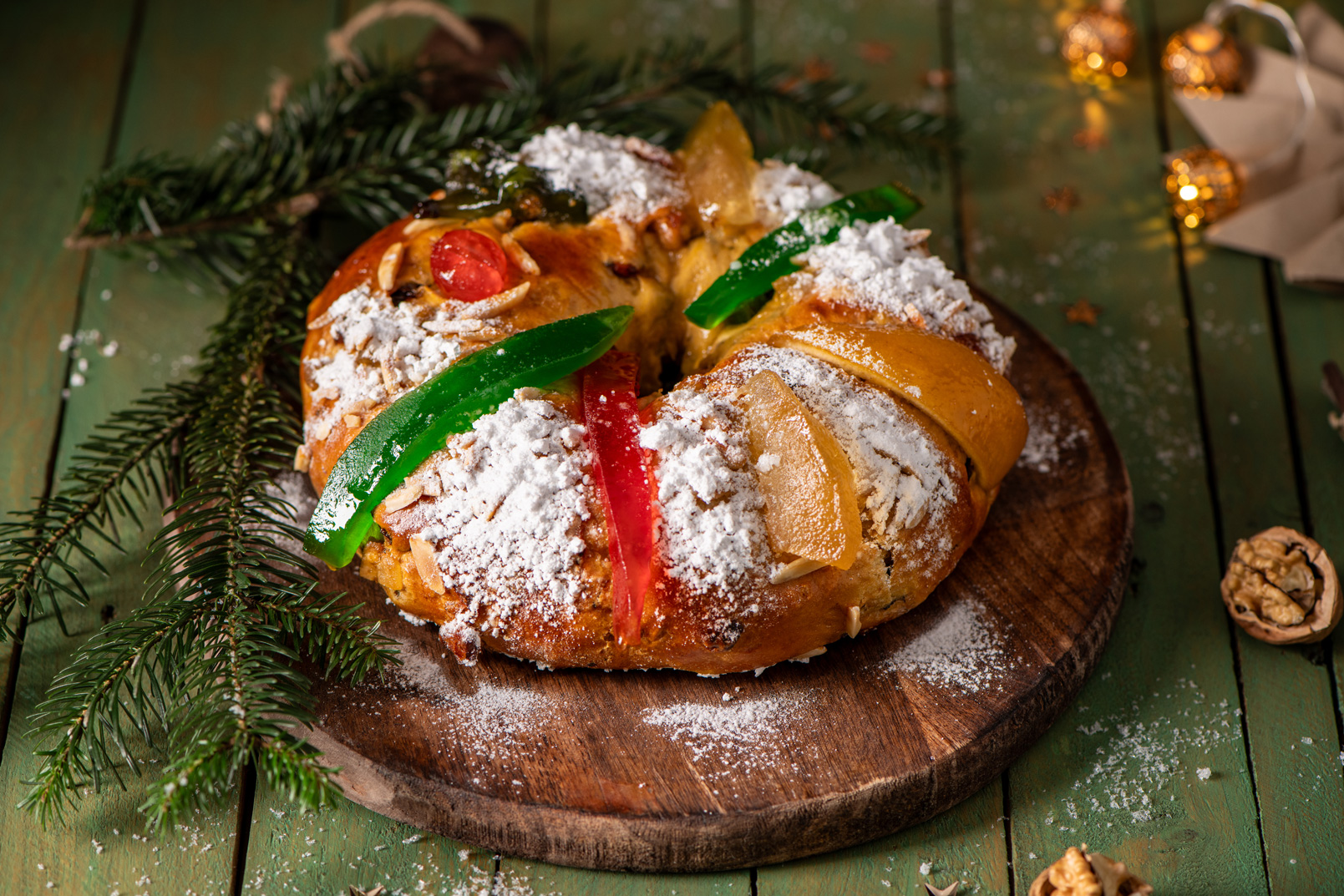
The name could not be more fitting. On the Christmas dessert table, this delicacy occupies the central place. Originating in the France of Louis XIV, the Gâteau des Rois (King Cake) celebrated New Year’s festivities and Epiphany, and it was brought to Portugal in the second half of the 19th century by Baltazar Rodrigues Castanheiro Júnior, heir to the founder of Confeitaria Nacional, the first establishment to make the cake in Portugal. Its name originally alluded to the Three Wise Men, and its composition refers to the gifts they offered to the Child Jesus: the golden tone of the crust symbolizes gold, the aroma represents incense, and the fruits stand for myrrh.
For a long time, Bolo Rei hid a broad bean or a small trinket inside. Nowadays, no one is required to buy the cake for the following year after receiving the slice with the bean, nor do people risk breaking a tooth on a metal trinket. This tradition came from pagan rituals: the trinket descended from the idea of an encounter with Charon (the mythical ferryman of Hades who transports the souls of the dead to their destination and demands payment), and the bean from the Roman tradition of choosing the king of the feast by drawing this plant.
Bolo Rei continues to be the ultimate symbol of the gastronomy of this season, and although variations of the recipe have appeared over time, the traditional version still has its throne assured.
After all, this delicacy went through difficult times after the French Revolution (when it was renamed Bolo sans-culottes), and in Portugal, with the establishment of the Republic, it gained other names such as Christmas Cake, New Year’s Cake, or even Bolo Arriaga.
Like its “husband,” Bolo Rainha (Queen Cake) also comes from France, although its arrival was much later. In fact, only in recent years has Bolo Rainha become firmly established as a Christmas tradition. For those who do not enjoy candied fruit, this is a way to take part in the Christmas tradition, as it contains only nuts and dried fruits.