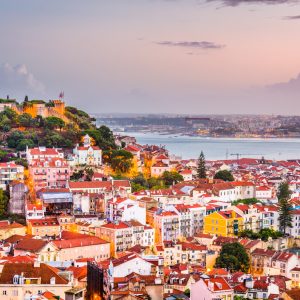
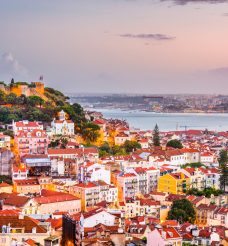
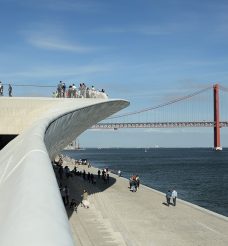
Lisbon is a city full of charm, alongside its neighboring Tagus River, from which the naus and caravels set sail in the 15th and 16th centuries to “open new worlds to the world.”
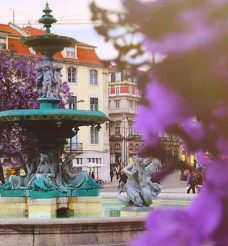
The magnificent lights, shadows, and colors seen in every picturesque corner, along with the landscapes offered by its many viewpoints, leave any visitor dazzled. The city’s more modern works also contribute to making Lisbon a cosmopolitan and contemporary city.

In the old neighborhoods (Alfama, Castelo, Graça, Lapa, Madalena, Mercês, Penha de França, Santa Catarina, Santa Engrácia, Santa Maria de Belém, Santos-o-Velho, São Sebastião da Pedreira, São Vicente de Fora, among others), visitors can enjoy walks rich in history and in the creative beauty of the Portuguese people, where the Lisbon soul of the traditional districts and their traditions is still preserved.
Throughout the 20th century, Lisbon’s urban appearance changed radically with the integration of functionalist architecture. There was also significant investment in the rehabilitation and development of areas along the riverfront. Two historical moments marked this transformation: the Portuguese World Exhibition of 1940, which led to changes in Belém, and, at the end of the 20th century, the construction of a new rehabilitated urban area for Expo ’98, held in 1998.
During the 21st century, modern and functional styles continued to grow throughout the city. Nevertheless, whenever possible, old buildings and neighborhoods have been preserved and restored, allowing history to follow its course.